

Activities
Home / ActivitiesScientist Track
- • Introduction of SpaceAI at the KSS Spring Conference: April 26–28
- • Submission and evaluation of research proposals (Scientist Track): May–June
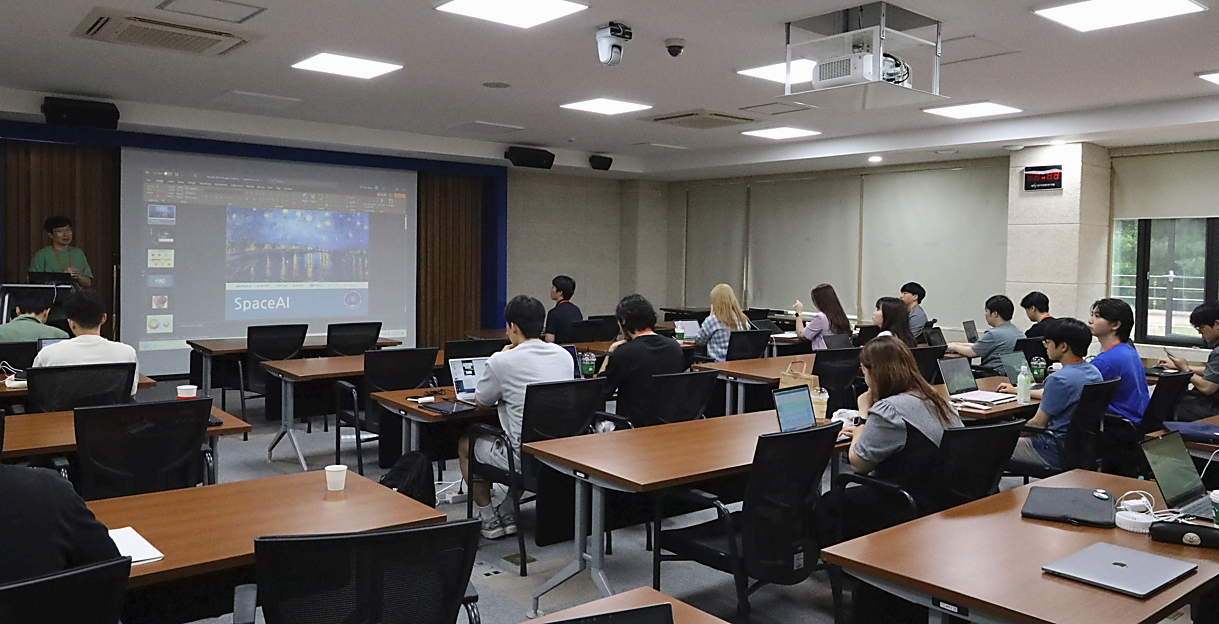
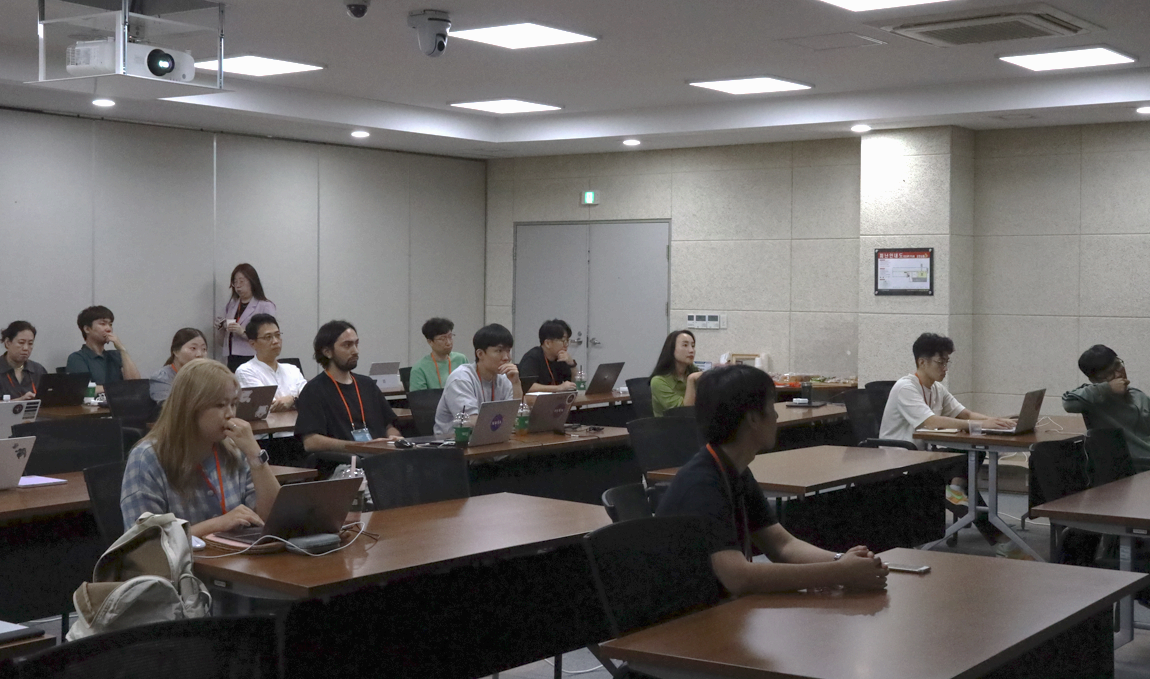
- • Kick-off meeting (team formation and task discussion): July 5
- • Team research activities (dataset preparation and AI model design): July–August
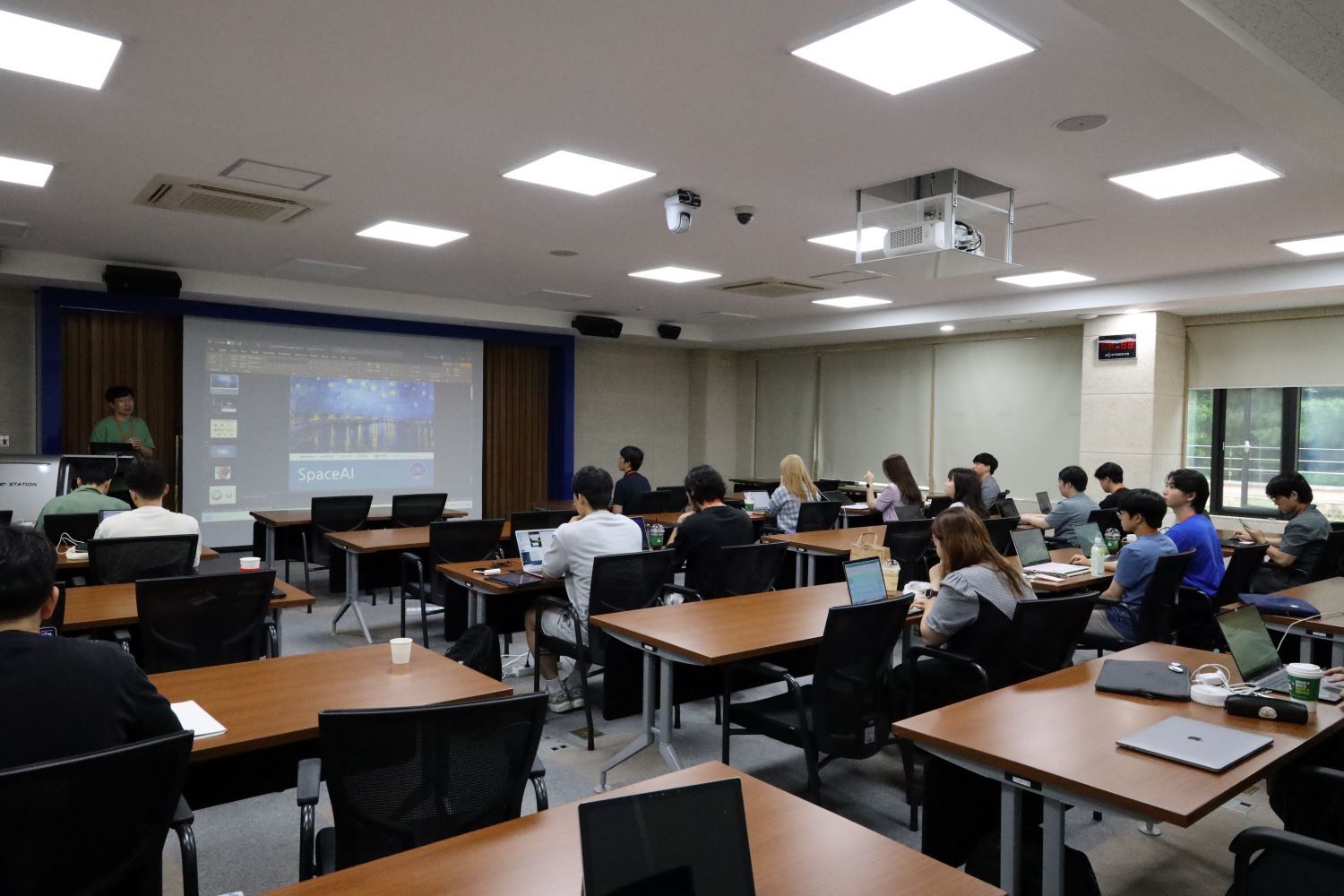
- • Intensive Collaboration Camp (AI model development/training): August 30–31
- • AI model (beta) operation and performance evaluation: September–November
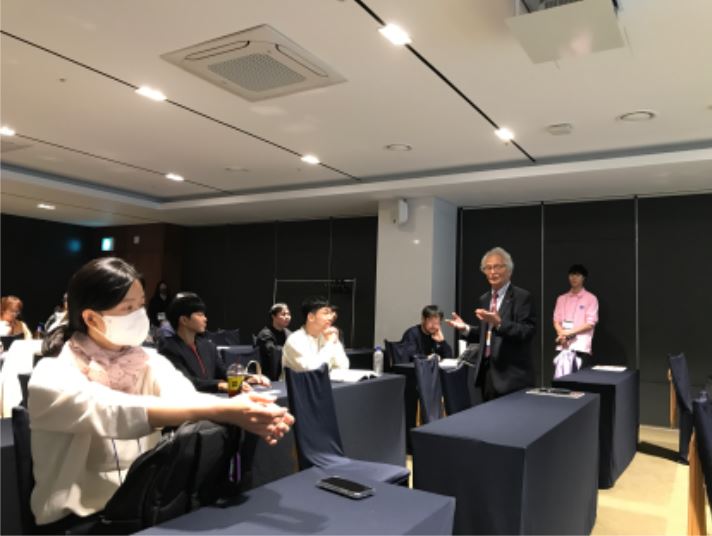
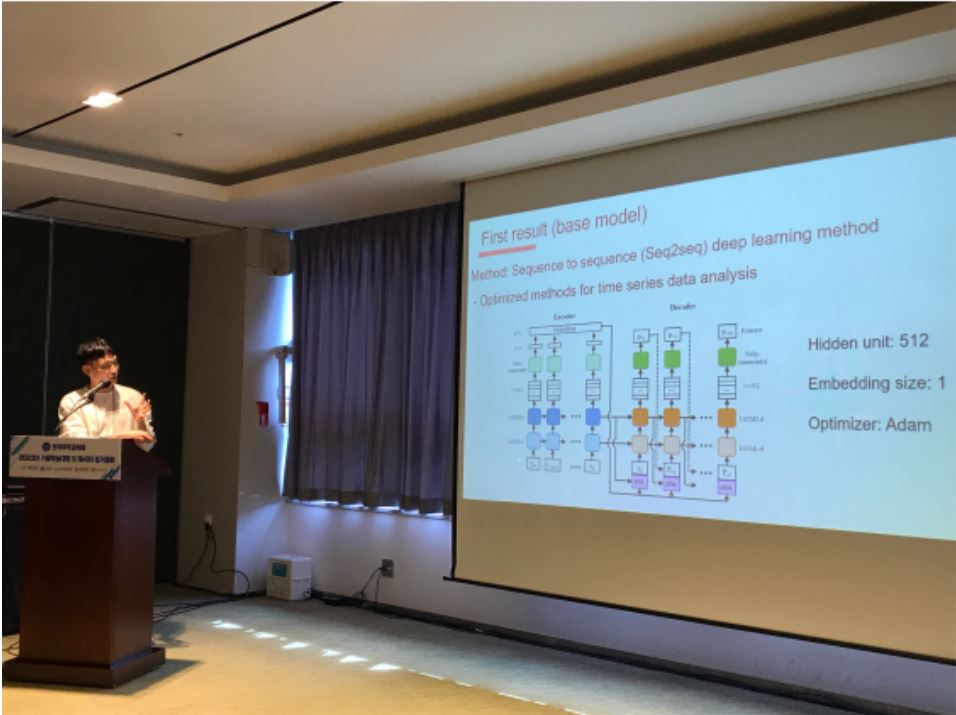
- • Special session and research presentations at the KSS Fall Conference: October 26
- • Conference (final presentations and program wrap-up): February 7, 2024
- • Research output consolidation and utilization (papers, patents, APIs): First half of 2024
Kick-off Meeting
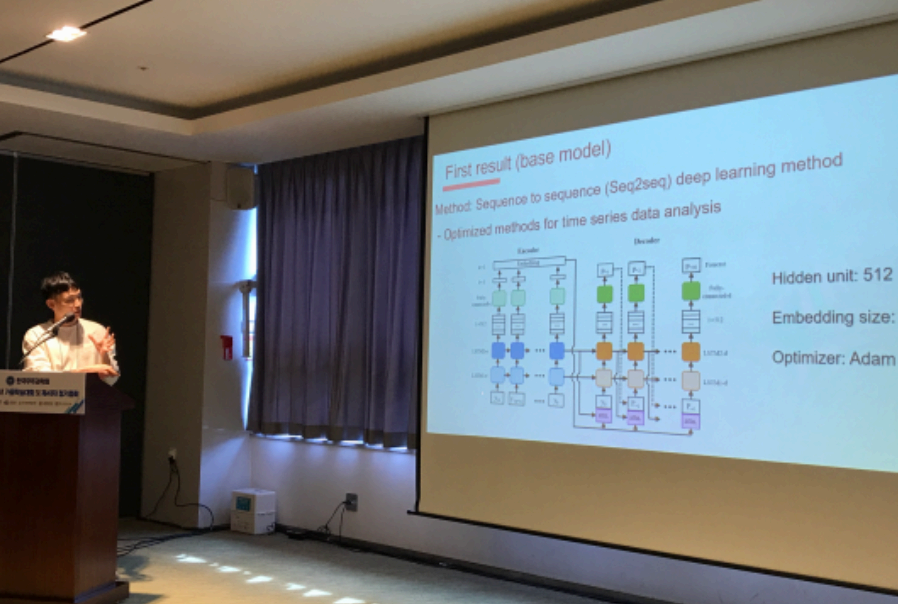
Intensive Collaboration Camp
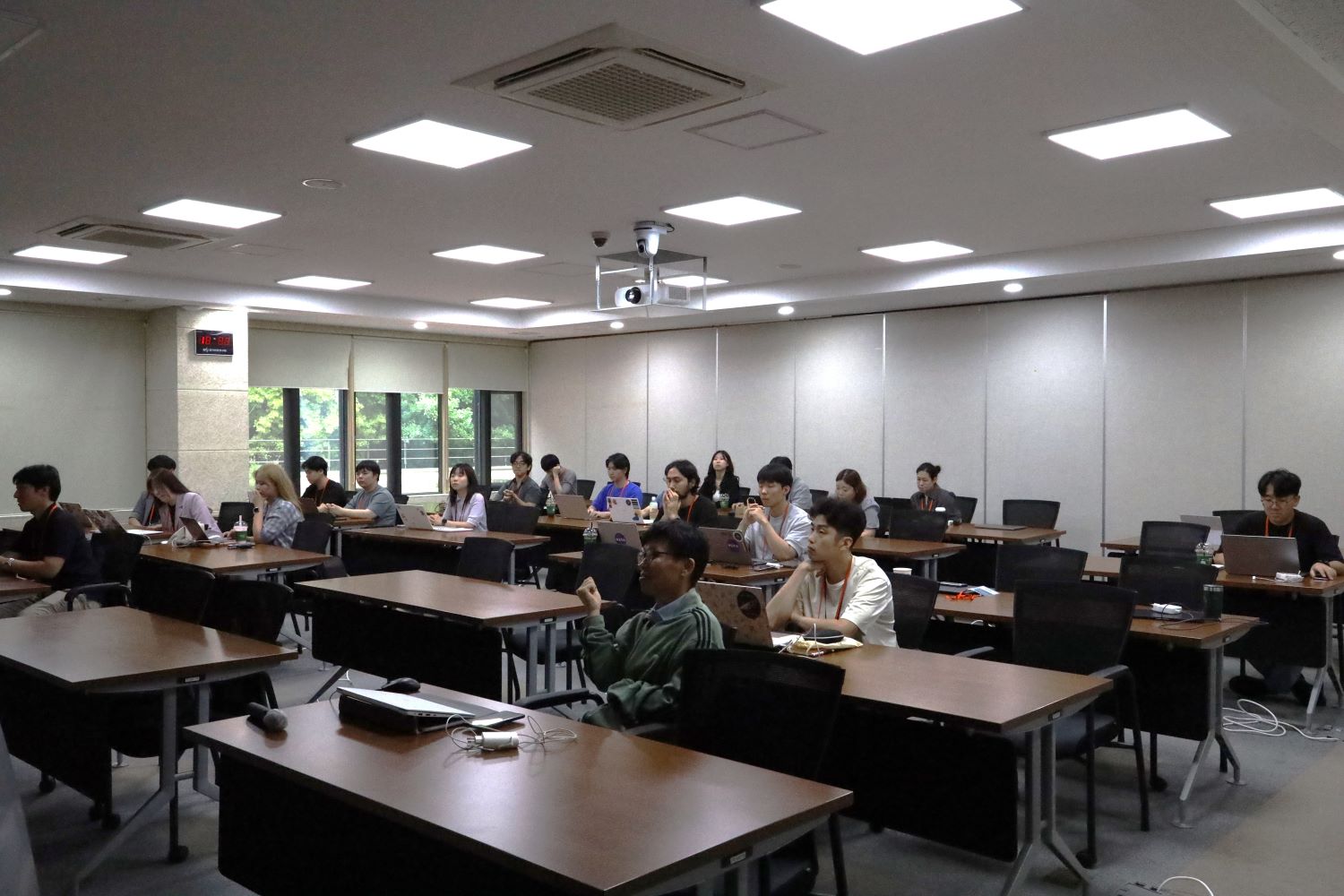
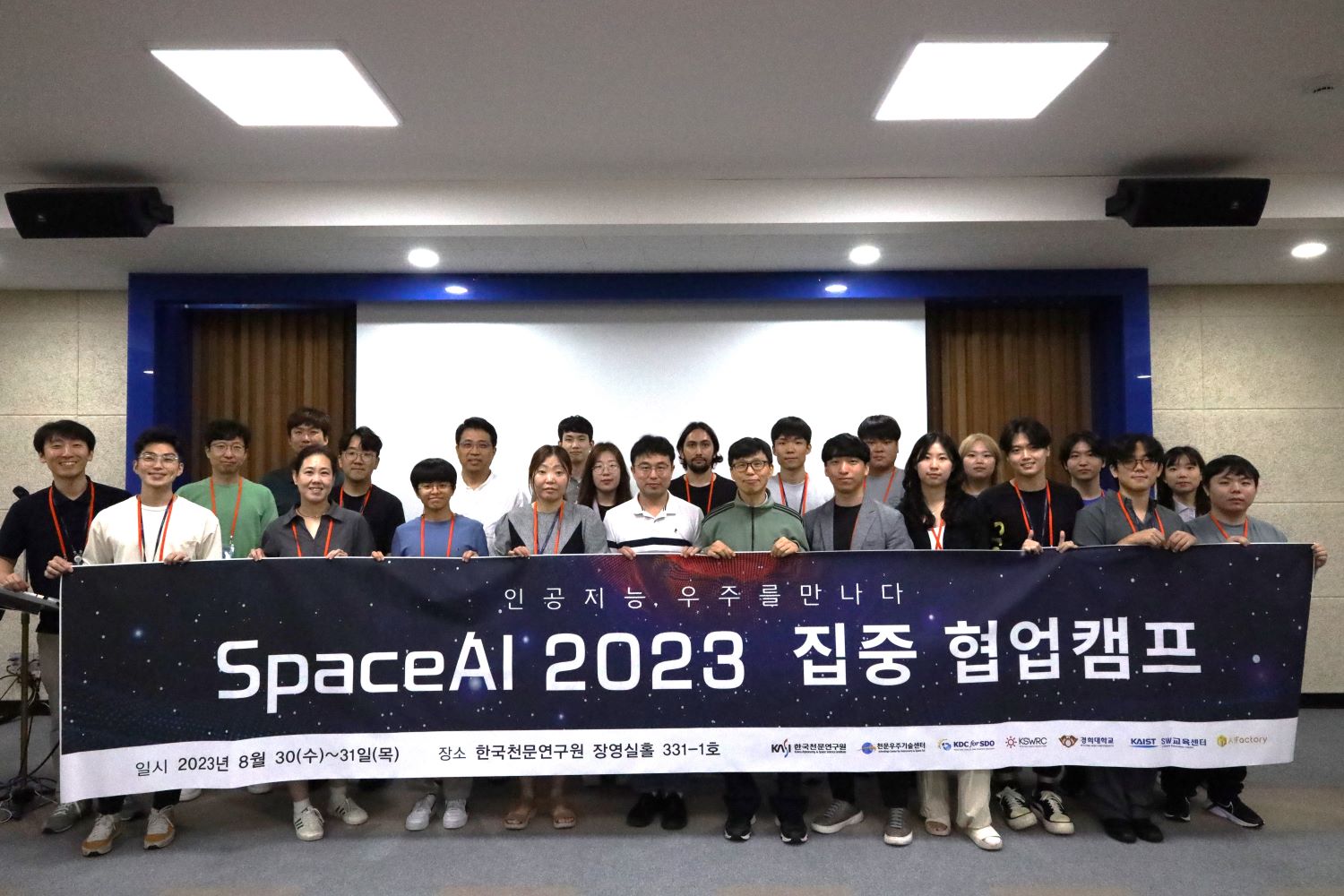
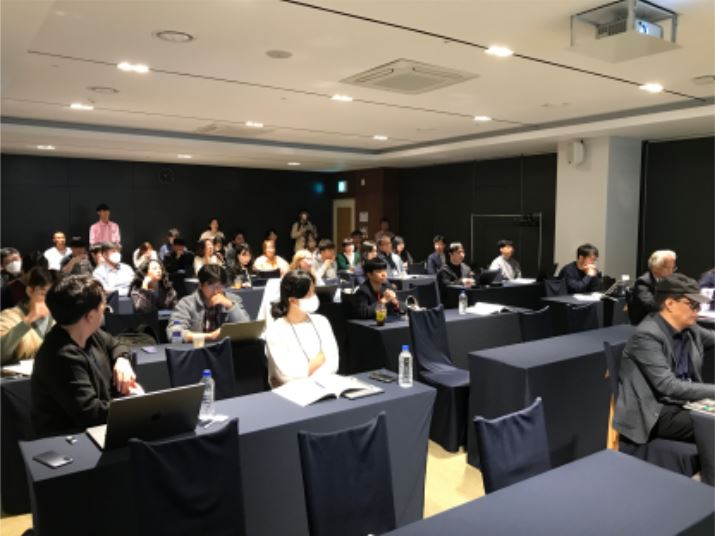
KSS 2023 Fall Conference Special Session & Presentations
×
![]()
Completed Research Projects
Team Projects
- • SPE proton flux profile prediction (Kang-Woo Lee et al.)
- • Prediction of solar active region evolution (Ha-Rim Lee et al.)
- • Deep learning vs. solar photospheric flux transport (Hyun-Jin Jung et al.)
- • Detection and cataloging of magnetic clouds from solar wind observations (Rok-Soon Kim et al.)
- • Modeling EUV flux based on soft X-ray flux during solar flares (Sung-Hong Park et al.)
- • Deep learning–based prediction of soft X-ray and EUV flux during solar flares (Jung-Heon Kim et al.)
Individual Projects
- • Estimation of 3D SHARP parameters from LOS solar magnetograms using deep learning (Ji-Hyun Son et al.)
- • Automatic detection of geomagnetic pulsations using deep learning image clustering (Jae-Young Kwak et al.)
- • Machine-learning-based calibration of magnetometers between satellite data and geomagnetic models (Ho-Seop Song et al.)
- • Image analysis using AI models trained on CubeSat OBCs (Byung-Kyung Cho et al.)
- • Optimization of mirror polishing processes via I/O correlation analysis for space astronomy mirrors (Jung-Yeol Han et al.)